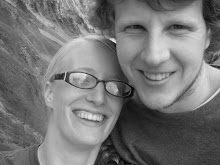
When you're 21 going on 60, you feel like an old geezer among your peers.
Lately I have been noticing that I seem to be a prematurely old person. Only a couple of years ago I was one of the impassioned people on campus--I was active, organizing, leading. I was out on the front lines, and likely would have been in the protest lines with a shiny placard above my head if I had continued on that track. But then life intervened. I got frustrated with working so hard for no real result. I burned out from trying to get other people excited, instead of enjoying myself and doing things I was interested in. Then I went far away from this place and learned a lot about life and priorities.
Recently I sat in on an interesting conversation with Michael Osmera, an adjunct professor in the Sociology and Anthropology department. In the course of his discussion with our Senior Proseminar class, he shared some of the wisdom he had acquired over a lifetime of trying and failing and caring... and he said something that caught my attention: "as you get older, you move from problem solving to coping" (emphasis mine). And I thought, "Huh. That's interesting."
Michael went on to explain that there is a recognizable cycle of experience when it comes to caring about things. It starts with passion and excitement. At that point, you are convinced that if you just throw all of your energy at something, that alone will create change. This is the starting point in the cycle, and, I think, is the stage that college students are most familiar with: it's exciting, it lets you think up catchy slogans and organize guest speakers and wear t-shirts that espouse your beliefs. It's fun, it's a party--it also has an end. That end is the wall that I hit at the end of sophomore year: the let down. Suddenly you realize that all the energy you spent really didn't do much. You begin to feel like nothing will ever change--after all, your passion meant nothing to the world. This second stage quickly degenerates into the third, which is when you give up on action. Your frustration and feeling of impotence leads you to apathy, and you withdraw from all those associations that once made you so excited. For once, you think to yourself, I just want to come home at night. Not go to another meeting or organize another function that no one will come to. I just want to sleep enough and try to be happy.
This third phase is a hard one to face if you have ever cared about anything in your life. You feel lazy and selfish, and wonder what happened to your former self: the one who cared, and who wanted to talk about these issues, who was so motivated and ambitious. When things come up in conversation, you are the one changing the subject, avoiding the arguments. Your friend groups shift. You start to read and think more, talk less. It's a disorienting time. And then you find stage four: coming to terms with it.
Stage four, Michael explained to us, is where real change starts. It is where you start to understand the nuances of issues, the complications. You get educated. You re-evaluate your past convictions in light of that knowledge. And you start to integrate that knowledge into the way you live: maybe buying fair trade every time you purchase coffee, instead of only sometimes, or joining a CSA instead of buying bell peppers from the supermarket (grown in Mexico), in December.
The coping phase doesn't usually happen for a long while. We humans seem to be willing to bang our heads against the wall for a long time before realizing that all we're getting out of it is a bloody bruise. And when you hit that phase, you feel suddenly old. You find yourself scolding your peers for being excited about things, even though that isn't really what you mean. You mean to tell them that their voices will be better heard if they are educated, and if their actions speak just as loudly or more so. But, when you encourage them to read more, their response is often "but what good will that do?"
Plenty, is the answer to that question. There's less glory in it. You don't get to be known on campus as "that girl who is so passionate" about a, b, or c. You are overlooked, drowned out by other, louder voices; the same people you used to work side by side with, ignore you. When you try to speak, you are accused of being harsh or mean, of "forgetting what it is like." Does this phrase ring a bell? You probably accused your parents of the same thing at some point, didn't you? When did you become the parent in this exchange? It sucks a little, doesn't it? Being prematurely old isn't easy when you're only 21. In the face of these accusations, I returned to my little hole, made some tea, and went back to reading. If nothing else, being educated about what I was saying mattered to me.
And then I noticed something: people started asking me questions. Friends became curious about all of that reading, wondering what it was that was so fascinating. They wondered why I was so passionate when they asked me what I thought, but no longer volunteered it. Professors started to come to me with questions, because they knew that I had read more on a given topic than they had. A friend told me jokingly that, "you're the most legit person I've met." And then I started to realize that I did have a voice after all. It was quieter than before. It wasn't as catchy or appealing: it rambled a little bit, grasping for the right words. It was more silent than anything else--letting the way I was living speak more than what I said did. Letting the words I did speak stand alone, not have to compete. Maybe I'm starting to come to terms with being 21 going on 60. It's a pretty good place to be, really, even if it's not as popular.
what a year 2009 has been...
b
Monday, December 28, 2009

Saturday, December 05, 2009
the want to be needed
"Freedom so often means that one isn't needed anywhere. Here you are an individual, you have a background of your own, you would be missed. But off there in the cities there are thousands of rolling stones like me. We are all alike; we have no ties, we know nobody, we own nothing. When one of us dies, they scarcely know where to bury him. Our landlady and the delicatessen man are our mourners, and we leave nothing behind us but a frock-coat and a fiddle, or an easel, or a typewriter, or whatever tool we got our living by. All we have ever managed to do is pay our rent, the exorbitant rent that one has to pay for a few square feet of space near the heart of things. We have no house, no place, no people of our own. We live in the streets, in the parks, in the theatres. We sit in restaurants and concert halls and look about at the hundreds of our own kind and shudder."
-Carl, from O Pioneers! by Willa Cather
i am learning more and more that i want to be needed. as much as i aspire to anonymity in the larger scheme of things, i can't imagine living a life in which no one person remembers the way that i laughed or hugged or kissed or cried. we only have this life, and in it we only have each other and the earth that we stand upon.
b
-Carl, from O Pioneers! by Willa Cather
i am learning more and more that i want to be needed. as much as i aspire to anonymity in the larger scheme of things, i can't imagine living a life in which no one person remembers the way that i laughed or hugged or kissed or cried. we only have this life, and in it we only have each other and the earth that we stand upon.
b
Tuesday, December 01, 2009
playing with prose
poetry, that is. before break i emailed lex, asking him what exactly prose poetry was. his response was about two paragraphs long, and ended with "that probably didn't help that much did it?" well, here's my attempt at some prose poetry. who knows if it is the real thing, but i like it.
1 am train
The first night in months that I crawled into bed without you, I found that I had forgotten how to sleep alone. I lay awake three hours past tired, still waiting for your steps on the stairs outside my window. Waiting for your almost quiet entry: the gentle clunk of the door closing, then the four steps to the couch, a crunch of bag and rustle of jacket, a sigh. The water glass filled in the kitchen, the flick of switches off, the one-minute-rhythm of a toothbrush before it lands on the counter; and finally, the grating push of a sticky bedroom door by careful fingers, not wanting to wake me up. I would roll over and pretend to peek from just-woken eyes and open my arms to welcome you into warmth, to my breast, your hair still clinging to the night's cold. But instead, I lay awake in an empty room; my only company the 1 am train whistle, and the weight of missing you.
1 am train
The first night in months that I crawled into bed without you, I found that I had forgotten how to sleep alone. I lay awake three hours past tired, still waiting for your steps on the stairs outside my window. Waiting for your almost quiet entry: the gentle clunk of the door closing, then the four steps to the couch, a crunch of bag and rustle of jacket, a sigh. The water glass filled in the kitchen, the flick of switches off, the one-minute-rhythm of a toothbrush before it lands on the counter; and finally, the grating push of a sticky bedroom door by careful fingers, not wanting to wake me up. I would roll over and pretend to peek from just-woken eyes and open my arms to welcome you into warmth, to my breast, your hair still clinging to the night's cold. But instead, I lay awake in an empty room; my only company the 1 am train whistle, and the weight of missing you.
b
Tuesday, November 03, 2009
i want to be c.k. williams
from The Writer's Almanac today:
It's the birthday of the poet Charles Kenneth Williams, C.K. Williams, born in Newark, New Jersey (1936). After graduating from college, he sat down and tried to read everything he'd ever heard of. He read Homer, Shakespeare, Dante, Chaucer, Whitman, Yeats, Eliot, Auden, Shelley, Tolstoy, Hawthorne, Miller, Frazer, Jung, Plath, and Ginsberg. He said: "I'd fall asleep every night over a book, dreaming in other people's voices. In the morning I'd wake up and try, mostly fruitlessly, to write acceptable poems."
b
It's the birthday of the poet Charles Kenneth Williams, C.K. Williams, born in Newark, New Jersey (1936). After graduating from college, he sat down and tried to read everything he'd ever heard of. He read Homer, Shakespeare, Dante, Chaucer, Whitman, Yeats, Eliot, Auden, Shelley, Tolstoy, Hawthorne, Miller, Frazer, Jung, Plath, and Ginsberg. He said: "I'd fall asleep every night over a book, dreaming in other people's voices. In the morning I'd wake up and try, mostly fruitlessly, to write acceptable poems."
b
Tuesday, October 27, 2009
no title yet
just when i am hitting a wall and can't think of anything to write about, union block provides. i love this little coffee shop. here is a very rough poem, fruits of this morning's latte. it needs work, like everything does, but i am happy with where it is going.
no title yet
there should be no
to-go cups,
alarm clocks
clocks
or calendars.
we don't need
more reminders
that time is
running
through our hands
like molecules
like grains
like drops
that stick
between our fingers,
grate there
wait there for
us to reach,
and then flee.
we feel it in
our bones,
in the ache
between our
third and fourth
rib. Taste it
on the edge
of the breath
we never quite
catch. Hear it
in the
hollow echo
of our voice,
too frail
to be carried--
that small white flag,
against the rush
and running
torrent.
we cannot take
ten, or even
twenty to
sit with a cup
of coffee,
cup and saucer,
to watch the wind,
the downfall
of one particular
leaf.
we don't need
another reason
to move on.
we are searching
for an excuse
to stay.
b
no title yet
there should be no
to-go cups,
alarm clocks
clocks
or calendars.
we don't need
more reminders
that time is
running
through our hands
like molecules
like grains
like drops
that stick
between our fingers,
grate there
wait there for
us to reach,
and then flee.
we feel it in
our bones,
in the ache
between our
third and fourth
rib. Taste it
on the edge
of the breath
we never quite
catch. Hear it
in the
hollow echo
of our voice,
too frail
to be carried--
that small white flag,
against the rush
and running
torrent.
we cannot take
ten, or even
twenty to
sit with a cup
of coffee,
cup and saucer,
to watch the wind,
the downfall
of one particular
leaf.
we don't need
another reason
to move on.
we are searching
for an excuse
to stay.
b
Tuesday, October 20, 2009
LALTing and other things
it seems to be a right of passage thing, being a senior in college and having no idea what you want to do with yourself. and it also seems to be a strange thing that we have classes and information sessions and workshops to attend, all designed to help us answer that question. i am currently taking a senior proseminar class where we spend a lot of time talking about what we might want to do with ourselves someday, eventually, whenever we might get around to it. yesterday, we did a "LALT" or "life after linfield trajectory" in class. it was a funny exercise for several reasons, not least of which that i diverged quite largely from the approach taken by my classmates.
i like to approach big changes step-wise. it scares me to think too far ahead, even with things that i am pretty certain about wanting to do. so, while my peers' LALTs were large webs of possibilities--6 different paths they could take after graduation, and where they eventually might lead--the most ambitious claim of mine was that i want to intern on an organic farm for the growing season of 2011. i have a rough idea of what i might want to do for the next year or so, but not the faintest clue after that. sure, grad school might happen in there somewhere, and i will probably do some traveling, and i will probably have some random adventures... but hell if i know what order they will occur in.
lately i have been struggling a bit with why i feel so un-ambitious. my friends are studying for the GRE and applying to grad school, turning in research proposals for fulbright scholarships, are applying to go abroad to teach english after graduating, etc, etc, etc.
i really just want to get an apartment somewhere here locally and give myself some time to figure things out. there's this whole side of being an adult--insurance, rent, loan payments, full time jobs--that i have no idea how to do, really. i want to have time to do not a whole lot besides figure some of that out. especially before i move somewhere, or go abroad, or re-complicate my life with school and deadlines again.
once upon a time i was ambitious: i wanted to go to medical school and work for MSF. those days are long-gone however, and now what i want more than anything is TIME. i want time to read and write and send letters and grow vegetables. i need some time to reflect on the whole college thing. i want some time to explore my options. i want some time without major stress (like moving to a foreign country or entering a graduate program), so that i can straighten out my brain a little bit. is that such a bad thing? who knows, maybe i'll come up with a new grand plan when my life is finally quiet enough for me to consider the possibilities... but maybe i'll just work in a coffee shop for a while, and read all of the books i have been accumulating of late, hang out with erik, volunteer, and finally write letters to friends i have been neglecting so badly. is it bad to be un-ambitious?
our society certainly would say so. and it does. "what, you mean you're not going to do anything with your degree?" is a much hated question i have had to defend against lately. well... not right now... but does that somehow make my four years of study worthless? i hardly think so, but in a world that demands concrete results, the personal growth that cannot be translated into a graph or excel spreadsheet just isn't going to cut it. i don't know if i want to "cut it."
i do know a lot of things that i want. and maybe that is what all of this is about: defining what i want, often by recognizing what it is that i DON'T want. i am not a patient person, but i am willing to wait and figure out what might be coming my way. in the meantime, here are a few things i do want to pursue:
1. reading for pleasure
2. long bike rides
3. trying new recipes
4. baking bread
5. Powells trips and coffee dates with friends
6. journaling and writing time
7. working on my thesis
8. spending quality time with erik
9. taking ceramics in the spring
10. learning to brew beer
b
i like to approach big changes step-wise. it scares me to think too far ahead, even with things that i am pretty certain about wanting to do. so, while my peers' LALTs were large webs of possibilities--6 different paths they could take after graduation, and where they eventually might lead--the most ambitious claim of mine was that i want to intern on an organic farm for the growing season of 2011. i have a rough idea of what i might want to do for the next year or so, but not the faintest clue after that. sure, grad school might happen in there somewhere, and i will probably do some traveling, and i will probably have some random adventures... but hell if i know what order they will occur in.
lately i have been struggling a bit with why i feel so un-ambitious. my friends are studying for the GRE and applying to grad school, turning in research proposals for fulbright scholarships, are applying to go abroad to teach english after graduating, etc, etc, etc.
i really just want to get an apartment somewhere here locally and give myself some time to figure things out. there's this whole side of being an adult--insurance, rent, loan payments, full time jobs--that i have no idea how to do, really. i want to have time to do not a whole lot besides figure some of that out. especially before i move somewhere, or go abroad, or re-complicate my life with school and deadlines again.
once upon a time i was ambitious: i wanted to go to medical school and work for MSF. those days are long-gone however, and now what i want more than anything is TIME. i want time to read and write and send letters and grow vegetables. i need some time to reflect on the whole college thing. i want some time to explore my options. i want some time without major stress (like moving to a foreign country or entering a graduate program), so that i can straighten out my brain a little bit. is that such a bad thing? who knows, maybe i'll come up with a new grand plan when my life is finally quiet enough for me to consider the possibilities... but maybe i'll just work in a coffee shop for a while, and read all of the books i have been accumulating of late, hang out with erik, volunteer, and finally write letters to friends i have been neglecting so badly. is it bad to be un-ambitious?
our society certainly would say so. and it does. "what, you mean you're not going to do anything with your degree?" is a much hated question i have had to defend against lately. well... not right now... but does that somehow make my four years of study worthless? i hardly think so, but in a world that demands concrete results, the personal growth that cannot be translated into a graph or excel spreadsheet just isn't going to cut it. i don't know if i want to "cut it."
i do know a lot of things that i want. and maybe that is what all of this is about: defining what i want, often by recognizing what it is that i DON'T want. i am not a patient person, but i am willing to wait and figure out what might be coming my way. in the meantime, here are a few things i do want to pursue:
1. reading for pleasure
2. long bike rides
3. trying new recipes
4. baking bread
5. Powells trips and coffee dates with friends
6. journaling and writing time
7. working on my thesis
8. spending quality time with erik
9. taking ceramics in the spring
10. learning to brew beer
b
Thursday, October 08, 2009
thank you, poetry class, for making me read more
being in lex's poetry class this term is bringing me much joy. not only is it forcing me, for once, to really sit down and take the time to write, but it also has me reading all kinds of new poetry. finding new poetry is a hit-and-miss process, but having a list of authors to check out sure is a helpful way to start.
here is one of my favorite new poems. i don't know what to make of much of this poet's work, but this one struck a chord with me.
Things Shouldn't Be So Hard
Kay Ryan
A life should leave
deep tracks:
rut where she
went out and back
to get the mail
or move the hose around the yard;
where she used to
stand before the sink,
a worn-out place;
beneath her hand
the china knobs
rubbed down to
white pastilles;
the switch she
used to feel for
in the dark
almost erased.
Her things should
keep her marks.
The passage
of a life should show;
it should abrade.
And when life stops,
a certain space--
however small--
should be left scarred
by the grand and
damaging parade.
Things shouldn't
be so hard.
b
here is one of my favorite new poems. i don't know what to make of much of this poet's work, but this one struck a chord with me.
Things Shouldn't Be So Hard
Kay Ryan
A life should leave
deep tracks:
rut where she
went out and back
to get the mail
or move the hose around the yard;
where she used to
stand before the sink,
a worn-out place;
beneath her hand
the china knobs
rubbed down to
white pastilles;
the switch she
used to feel for
in the dark
almost erased.
Her things should
keep her marks.
The passage
of a life should show;
it should abrade.
And when life stops,
a certain space--
however small--
should be left scarred
by the grand and
damaging parade.
Things shouldn't
be so hard.
b
Subscribe to:
Posts (Atom)